
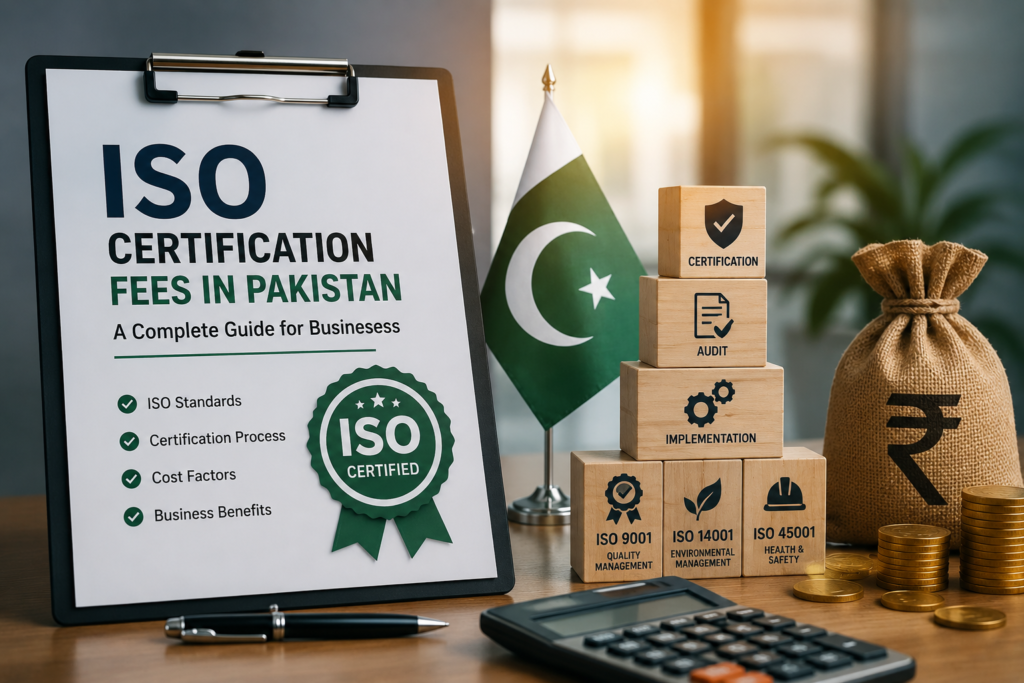
Organizations across Pakistan are increasingly seeking ISO Certification Services to improve quality, compliance, and customer trust. One of the most common questions organizations ask is about ISO Certification Fees in Pakistan. Understanding the cost factors involved can help companies plan their certification journey effectively and avoid unexpected expenses.
Understanding ISO Certification Fees in Pakistan
The cost of ISO certification varies depending on several factors, including the size of the organization, the number of employees, business complexity, and the specific ISO standard being implemented. ISO Certification Fees in Pakistan may differ for small businesses, medium-sized enterprises, and large corporations.
Businesses seeking compliance with standards published by the International Organization for Standardization (ISO) should understand both implementation and certification costs before starting the process.
Factors That Affect ISO Certification Fees in Pakistan
Several elements influence the total certification cost, including:
- Type of ISO standard required
- Company size and workforce
- Number of operational locations
- Existing management systems
- Consultancy requirements
- Certification body fees
- Surveillance and renewal audits
Understanding these factors helps businesses estimate certification expenses more accurately.
Average ISO Certification Fees in Pakistan for Different Standards
Different ISO standards have different implementation and certification requirements. For example:
- ISO 9001 Certification
- ISO 14001 (Environmental Management)
- ISO 45001 (Occupational Health & Safety)
- ISO 22000 (Food Safety Management)
The overall ISO Certification Fees in Pakistan depend on the selected standard and the level of support required throughout the certification process.
How Consultants Help Reduce ISO Certification Fees in Pakistan
Many businesses assume hiring consultants increases costs. In reality, professional ISO Consulting Services can help reduce implementation delays, avoid non-conformities, and improve audit readiness.
Professional guidance ensures that organizations complete certification efficiently while controlling unnecessary expenses. This often results in better value and faster certification.
Hidden Costs to Consider When Calculating ISO Certification Fees in Pakistan
Organizations should also consider additional costs such as:
- Employee training programs
- Documentation development
- Internal audits
- Corrective actions
- Annual surveillance audits
- Recertification audits
Accounting for these expenses provides a more realistic picture of total certification investment.
Tips for Managing ISO Certification Fees in Pakistan
Businesses can optimize certification costs by:
- Selecting the right certification scope
- Preparing documentation early
- Training employees effectively
- Conducting internal audits regularly
- Working with qualified consultants
These strategies help organizations achieve compliance while maintaining budget control while following ISO Quality Management Principles
Choosing the Right Partner for ISO Certification Fees in Pakistan
When evaluating certification providers and consultants, businesses should focus on expertise, transparency, and industry experience rather than price alone. The lowest-cost option may not always deliver the best results.
A trusted certification partner can help organizations achieve compliance efficiently while maximizing the return on their investment. To discuss your requirements, Contact Our ISO Experts
Conclusion
Understanding ISO Certification Fees in Pakistan is essential for businesses planning to obtain internationally recognized certifications. Costs can vary based on organizational size, certification scope, and implementation requirements. By partnering with experienced professionals and planning strategically, organizations can manage costs effectively and achieve certification success.
Follow us on Facebook and Instagram for the latest updates, certification insights, and industry best practices.