
Businesses today are expected to do more than deliver quality products and services. Customers, regulators, and international partners increasingly prefer organizations that actively manage their environmental impact. This is why ISO 14001 Certification in Pakistan has become an essential investment for companies seeking sustainable growth and global recognition.
Whether you operate a manufacturing facility, construction company, healthcare organization, or service-based business, implementing an Environmental Management System can help you reduce waste, improve efficiency, and strengthen your reputation in the marketplace.
Follow us on Facebook and Instagram for regular updates on ISO certifications, compliance requirements, and business improvement strategies.

The Growing Importance of Environmental Management
Environmental challenges are becoming increasingly significant for businesses worldwide. Rising customer awareness, stricter regulations, and international supply chain requirements are encouraging organizations to adopt globally recognized environmental standards.
Implementing ISO 14001 Certification in Pakistan enables organizations to establish clear environmental objectives, monitor performance, and continuously improve environmental outcomes.
For businesses already maintaining quality systems, ISO 9001 Certification in Pakistan can be linked here as part of an integrated management approach.

What Makes ISO 14001 Different?
Unlike many compliance-focused programs, ISO 14001 encourages organizations to take a proactive approach toward environmental management.
The standard focuses on:
- Identifying environmental impacts
- Managing environmental risks
- Meeting legal requirements
- Improving resource efficiency
- Preventing pollution
- Encouraging continuous improvement
Business Benefits of ISO 14001 Certification in Pakistan
- Improved Operational Efficiency
Organizations often discover opportunities to reduce energy consumption, minimize waste, and optimize resource utilization.
- Enhanced Corporate Reputation
Environmental responsibility improves trust among customers, investors, and regulatory authorities.
- Competitive Advantage
Certified organizations often gain an advantage when competing for contracts and international business opportunities.
- Better Risk Management
A structured management system helps identify environmental issues before they become costly problems.

Industries Successfully Implementing ISO 14001
The standard can be applied to businesses of all sizes and sectors, including:
- Manufacturing
- Textile Industry
- Construction
- Healthcare
- Food Processing
- Logistics
- Educational Institutions
- Engineering Services
Organizations often work with ISO Consultants in Pakistan to simplify implementation and certification requirements.
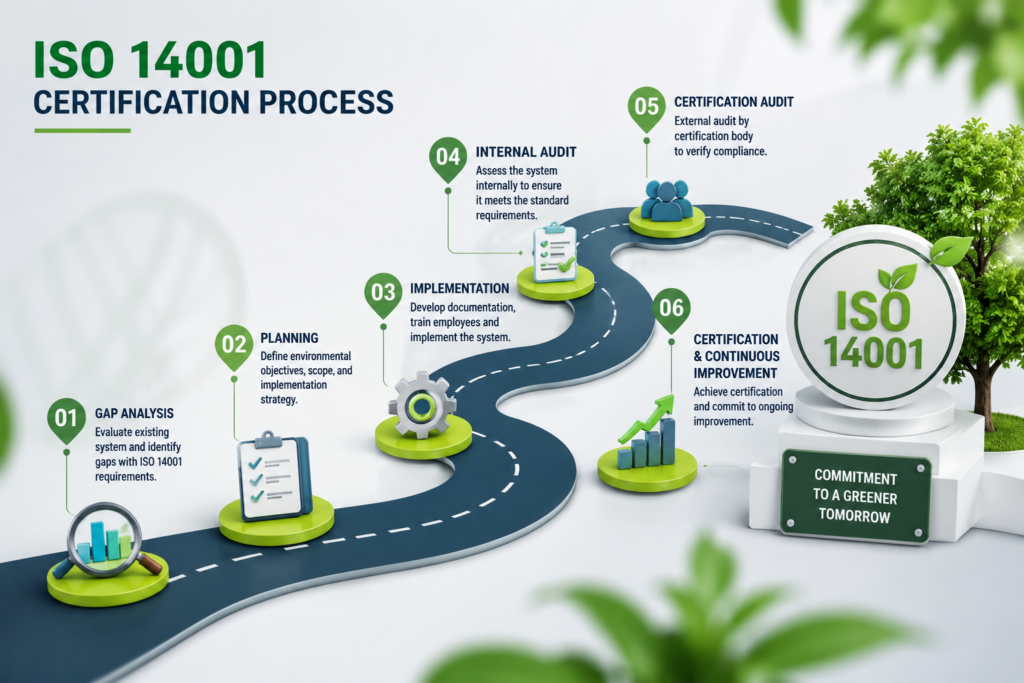
Steps to Achieve Certification
Step 1: Environmental Review
Evaluate existing environmental practices and identify areas for improvement.
Step 2: System Development
Develop policies, objectives, procedures, and supporting documentation.
Step 3: Employee Training
Ensure employees understand environmental responsibilities and compliance requirements.
Step 4: System Implementation
Apply environmental controls throughout the organization.
Step 5: Internal Audit
Assess system effectiveness before certification assessment.
Step 6: Certification Audit
An accredited certification body conducts the final evaluation.
Supporting Long-Term Sustainability Goals
One of the most valuable aspects of ISO 14001 Certification in Pakistan is its focus on continual improvement. Instead of treating environmental management as a one-time project, organizations establish systems that evolve alongside business growth.
Companies seeking international market access can also integrate CE Mark Certification Services and other compliance frameworks into their business strategy.

Selecting the Right Certification Partner
A successful certification project depends on expert guidance and practical implementation support.
Look for consultants who offer:
- Industry-specific expertise
- Comprehensive documentation support
- Employee training programs
- Internal audit assistance
- Post-certification guidance
Businesses operating in food-related sectors may also consider Halal Certification in Pakistan as part of their broader compliance strategy.

Connect With Our Experts
Need guidance on ISO implementation or certification requirements?
Stay connected with us on Facebook and Instagram for expert insights, certification updates, and practical business compliance tips. You can also contact our team for a personalized consultation and certification roadmap.
Conclusion
Environmental sustainability is no longer optional in today’s competitive marketplace. Organizations that obtain ISO 14001 Certification in Pakistan demonstrate leadership, responsibility, and a commitment to continuous improvement.
By implementing an effective Environmental Management System, businesses can reduce environmental risks, improve operational efficiency, strengthen stakeholder confidence, and unlock new opportunities in both local and international markets.