
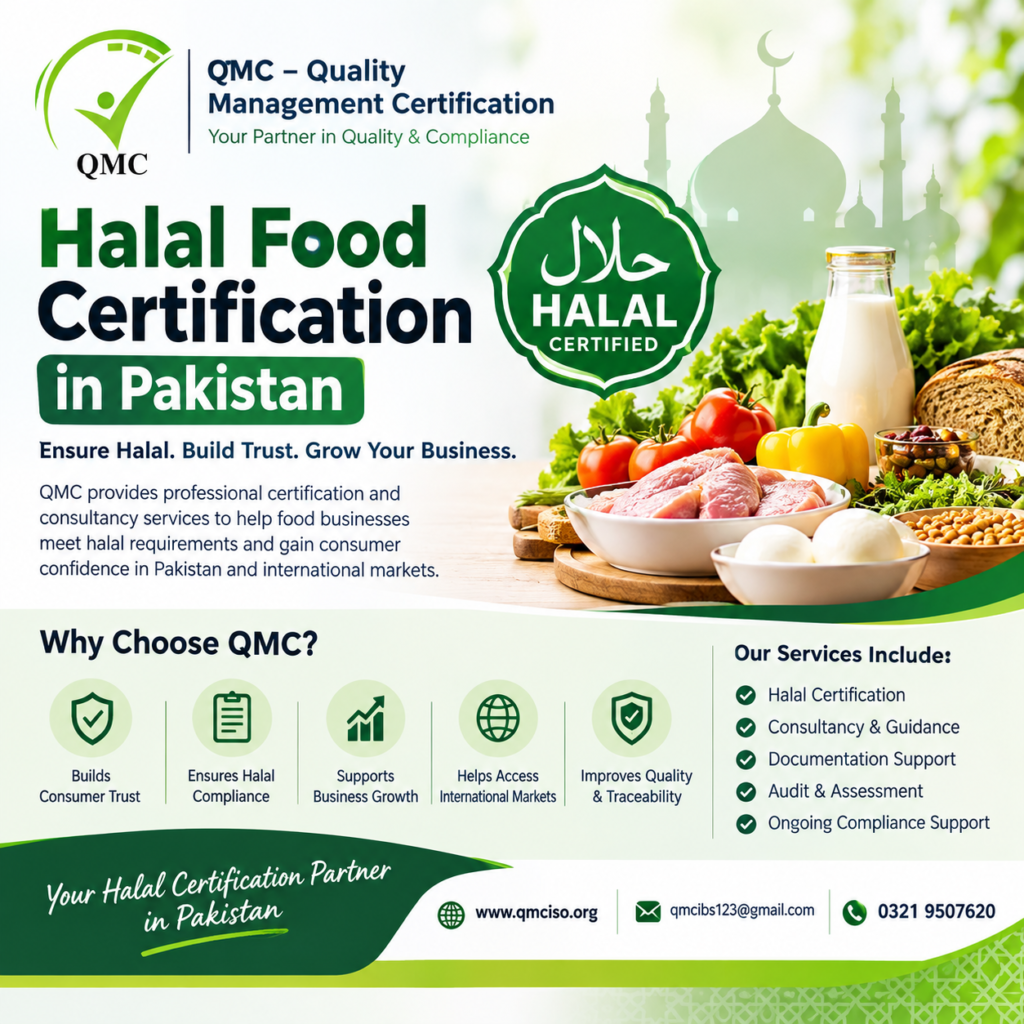
Halal certification has become an important requirement for businesses serving Muslim consumers in Pakistan and international markets. Customers increasingly look for products that meet recognized halal requirements. Businesses also need reliable certification to demonstrate the halal status of their products and processes.
QMC Halal Certification in Pakistan helps businesses establish confidence in their halal claims. The certification process evaluates relevant products, ingredients, production practices, and documentation according to applicable halal requirements.
What Is Halal Certification?
Halal certification confirms that a product, process, or service meets defined halal requirements. It provides assurance regarding the use of permissible ingredients and appropriate production practices.
Halal requirements can apply to several industries. These include:
- Food and beverage manufacturing
- Meat and poultry processing
- Pharmaceuticals
- Cosmetics
- Personal care products
- Food ingredients
- Restaurants and catering
- Consumer products
- Export-oriented businesses
Therefore, halal certification can support businesses operating across different sectors.
Why Halal Certification Matters for Businesses
Consumer trust plays a major role in purchasing decisions. A recognized halal certification gives customers additional confidence in the products they purchase.
Moreover, certification can strengthen a company’s professional image. It demonstrates that the organization has considered halal requirements within its relevant operations.
Halal certification can also support businesses targeting Muslim-majority markets. Exporters may benefit from documented halal compliance when dealing with customers, distributors, and market requirements.
Key Benefits
Customer Confidence
Certified products provide greater assurance to consumers seeking halal products.
Market Expansion
Halal certification can support businesses interested in entering new domestic and international markets.
Professional Credibility
A structured certification process demonstrates commitment to quality, compliance, and halal requirements.
Business Opportunities
Certification can make products more attractive to distributors, retailers, importers, and institutional buyers.
Brand Reputation
A transparent approach to halal compliance can strengthen long-term customer relationships.
QMC Halal Certification Process
A structured certification process helps businesses understand their halal compliance requirements. QMC can guide organizations through the relevant stages of certification.
1. Initial Consultation
The process begins with an assessment of the business and its certification requirements. Product categories, processes, ingredients, and operational activities can be reviewed.
2. Documentation Review
Relevant documents are examined to understand the materials and procedures used by the organization. Ingredient information, supplier details, production procedures, and other applicable records may be required.
3. Halal Compliance Assessment
The organization’s products and processes are assessed against applicable halal requirements. Particular attention can be given to ingredients, processing methods, storage, handling, and potential sources of contamination.
4. Site Assessment
Where applicable, the production facility or relevant premises can be evaluated. The assessment helps verify that operational practices support halal compliance.
5. Corrective Actions
Any identified gaps can be addressed through appropriate corrective measures. Businesses can receive guidance on improving relevant procedures and documentation.
6. Certification
After successful completion of the required assessment and compliance process, the applicable halal certification can be issued.
Halal Certification for Export Businesses
International buyers often require clear evidence of product compliance. Halal certification can help exporters communicate their commitment to halal requirements.
Furthermore, certified products may have stronger appeal in markets where halal status is an important purchasing consideration. Businesses involved in food, beverages, ingredients, cosmetics, pharmaceuticals, and other consumer products can explore halal certification as part of their export strategy.
Proper documentation also supports communication with overseas buyers. It provides a formal basis for demonstrating the halal status of applicable products.
Industries That Can Benefit from Halal Certification
Halal certification is not limited to traditional food businesses. Several industries can benefit from a structured halal compliance approach.
Food and Beverage
Manufacturers of processed foods, beverages, bakery products, snacks, sauces, and other food products can benefit from halal certification.
Meat and Poultry
Meat processors and related businesses can use certification to demonstrate compliance with applicable halal requirements.
Cosmetics and Personal Care
Cosmetic and personal care manufacturers may seek halal certification for products containing ingredients that require halal verification.
Pharmaceuticals
Pharmaceutical businesses can evaluate halal requirements related to ingredients, manufacturing processes, and applicable product categories.
Food Ingredients
Ingredient manufacturers and suppliers can use halal certification to provide greater assurance to downstream food manufacturers.
Building Global Trust Through Halal Compliance
Trust is essential when businesses enter competitive international markets. Customers and buyers want confidence in the claims made about products.
A reliable halal certification framework provides documented assurance. In addition, it encourages businesses to maintain appropriate records and consistent processes.
For Pakistani manufacturers and exporters, halal certification can become an important part of a broader market-development strategy. It can help communicate product integrity while supporting customer expectations in halal-focused markets.
Why Choose QMC?
QMC provides certification-related support for businesses seeking structured compliance solutions. The organization can help businesses understand relevant requirements, prepare documentation, address compliance gaps, and navigate the certification process.
A professional approach also helps companies maintain better control over their certification documentation. As a result, businesses can present a clearer compliance profile to customers and business partners.
Take the Next Step Toward Halal Certification
Halal certification can provide more than a certification document. It can support customer confidence, strengthen business credibility, and create opportunities in markets where halal compliance matters.
If your business manufactures, processes, supplies, or exports products that require halal verification, obtaining the appropriate certification can be a valuable step toward building stronger market trust.
QMC can help your business understand the halal certification requirements and move toward a structured certification process in Pakistan.
Conclusion
Global markets increasingly value transparency, compliance, and consumer confidence. Halal certification helps businesses communicate their commitment to recognized halal requirements.
With QMC Halal Certification in Pakistan, businesses can work toward stronger customer trust and improved market credibility. A structured approach to halal compliance can also support expansion into halal-focused domestic and international markets.
Build trust. Strengthen your brand. Expand your market with reliable halal certification support from QMC.