
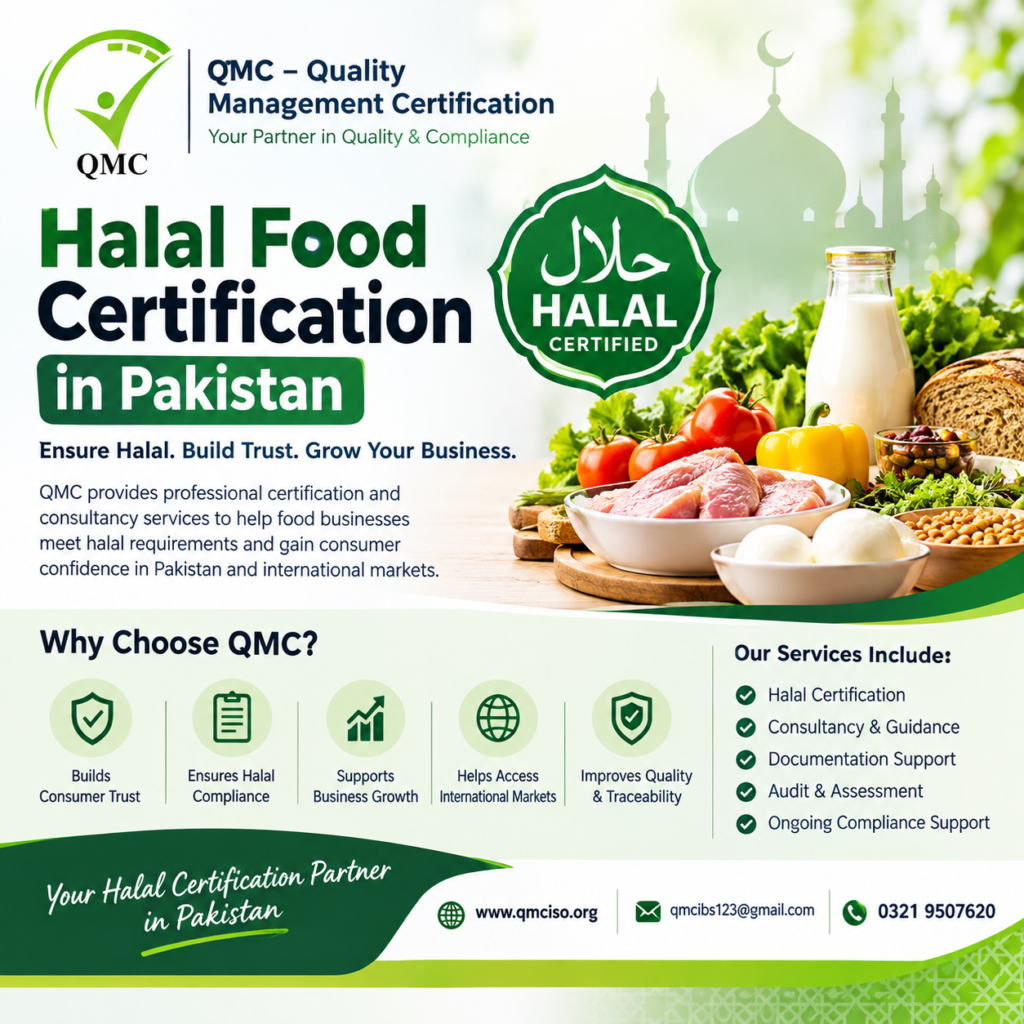
Halal Food Certification in Pakistan is a formal process used to verify that food products, ingredients, manufacturing processes, handling, storage, and packaging comply with applicable halal requirements.
Halal certification is particularly important for food manufacturers, processors, restaurants, exporters, and other businesses involved in the food industry. It provides consumers and business partners with confidence that certified products have been assessed according to relevant halal requirements.
Halal certification may apply to a wide range of products, including meat and poultry, dairy products, bakery items, beverages, confectionery, processed foods, sauces, frozen foods, and other food products.
Why Is Halal Certification Important?
Pakistan has a large Muslim consumer market, making halal assurance an important consideration for food businesses. A halal certificate can help demonstrate that products and processes have been evaluated for compliance with applicable halal requirements.
Some key benefits include:
- Builds consumer trust and confidence
- Demonstrates commitment to halal requirements
- Improves product credibility in the marketplace
- Supports business growth and market expansion
- Helps meet the requirements of certain buyers and markets
- Can support access to international halal markets
- Encourages better control over ingredients and production processes
For businesses involved in exports, halal certification may also be required by particular customers, importing countries, or market regulations.
Halal Food Certification Process in Pakistan
The certification process may vary depending on the certification body, product type, and scope of certification. Generally, businesses can expect the following steps:
1. Application and Information Collection
The business provides information about its products, ingredients, manufacturing facility, suppliers, and production activities.
2. Document and Ingredient Review
Relevant documents, product formulations, ingredient specifications, supplier information, and processing materials are reviewed to identify potential halal concerns.
3. Facility Assessment
The production facility and relevant processes are assessed to verify appropriate handling, storage, hygiene, segregation, and contamination controls.
4. Audit and Compliance Assessment
An assessment or audit is conducted to determine whether the organization’s processes meet the applicable halal requirements.
5. Corrective Actions
If any non-conformities are identified, the organization may need to implement corrective actions and provide evidence of their completion.
6. Halal Certificate
After successful completion of the required assessment and approval, the certification body can issue the halal certificate within the agreed scope.
Who Needs Halal Food Certification?
Halal Food Certification in Pakistan can be relevant to a variety of businesses, including:
- Food manufacturers
- Meat and poultry processors
- Dairy and beverage manufacturers
- Bakeries and confectionery businesses
- Restaurants and food service companies
- Food processors and packaging companies
- Food exporters
- Importers and distributors
The specific requirements depend on the nature of the business, products, ingredients, processes, and intended market.
Halal Certification for Food Exporters
Halal certification can be especially valuable for Pakistani food exporters looking to enter international markets. Many international buyers and consumers look for reliable halal assurance when purchasing food products.
However, requirements can differ between countries and markets. Businesses should therefore identify the specific halal certification and regulatory requirements applicable to their target market before beginning the certification process.
Get Halal Food Certification in Pakistan with QMC
QMC – Quality Management Certification provides professional certification and consultancy-related services to businesses seeking to understand and meet applicable certification requirements.
If your business needs Halal Food Certification in Pakistan, QMC can help you understand the relevant requirements and prepare for the certification process.
📞 Phone: 0321-9507620
🌐 Website: www.qmciso.org
📧 Email: qmcibs123@gmail.com
Contact QMC today to discuss your halal certification requirements and take the next step toward building greater trust in your food products.